Bitácora
On rootedness and non-oppressive practice as a flying river– Dec 2025- Colombia. For Studium Planetaire, UDK Berlín
Ricaurte, Cundinamarca, Colombia
December 2025
Dear reader,
I like to address the reader because sometimes, as artists, cultural workers, and mediators,we forget that without a spectator, without a mirror in which light can be reflected, our offering is lost and ceases to be an offering toward the other.
This text is unfinished, not in form but in the mutable and constantly growing nature of this practice: that of questioning the hegemonic structures to which we, cultural workers, have relegated ourselves in order to produce the effect of a calming balm for the colonial (oppressive) guilt of global powers. It is also an offering, to you, to my land, and to all the lands where I have coexisted, from my uprootness I have constructed a mycelium that sustains me and this is my tribute to its wet roots.
I want to be compassionate and tender with you, dear reader, because I know that if I am blunt your body will close, and my message will not go beyond discomfort or offense. We are so accustomed to receiving shocking messages that our soul and eyes, like an “intolerable image,” linger only for a few seconds and then repel it out of a need for comfort. In this convulsed time, where oppressive powers have the audacity to be transparent in their intentions; in these times where some tell others to “go home,” as if human nature were not inherently transient, as if migration wasn’t a direct consequence of the economic and identitary decay that comes after the gruesome life after death that implies a colony.
In these times of profound doubt, it is necessary to ask: what is all this for? What are galleries for, whose global audiences are mostly limited by access to cultural and economic capital? What are biennials for, which sometimes instrumentalize works that poignantly reveal processes of uprooting and destruction, stylized colonies translated into many languages to be observed with pity, but never transformed at their colonial roots?
What is the purpose of generating objects that end up in private collections that fuel speculative markets and launder illicit money and narco-capital? What for?
All forms of art-making are valid, but at a certain point, every practitioner must question whether their practice aligns with their political being. In these tribulations, dear reader, I have spent the last ten years generating spaces where artistic practices return to their primordial motives: union, collectivization, the transmission of oral knowledge, and care. A care that whispers that, in this sharpened world, safe spaces still exist.
I ask you reader to think of a moment in which you have felt cared for. Take your time. Feel it in your sternum. What comes to mind? A hug, a meal, a gift, a song, a story, gossip, a drink. All of this is an artistic experience because it involves appealing to the senses of another. Even in this era of artificial intelligence, we still long for gathering around a fire to listen and share. Artistic practice is the primordial way of imagining, dreaming, expressing, and feeling part of something that comforts us in the midst of the indecipherable existential infinite. It is also what accompanies every social movement, which underlines the primordial fabric of art: collective emotions.
Along this line of thought, I have been generating co-research in different territories (in Colombia, Germany, and Tunisia) to collectively build a methodology that allows our artistic practices to approach spaces of care and move away from repeating colonial and oppressive dynamics. Before continuing, you have surely noticed, dear reader, that I frequently use the word colonial. However, I believe it is a term that must be used with care, since the “decolonial” often omits class struggle and places the enemy outside instead of looking inward, toward the internal oppressor
This is now a tokenized term, meaning it is used as a market value chip rather than as a real intention to question colonial dynamics. Therefore, I speak of oppression and the oppressor, and along this path we embark on something that goes beyond artistic practice: (I ask you to inhale and exhale, reader) we embark on confronting the oppressor that we all carry within us.
Final text to be published, Studium Planetaire, Klase Klima, UDK, Berlín, May 2026
Publicaciones


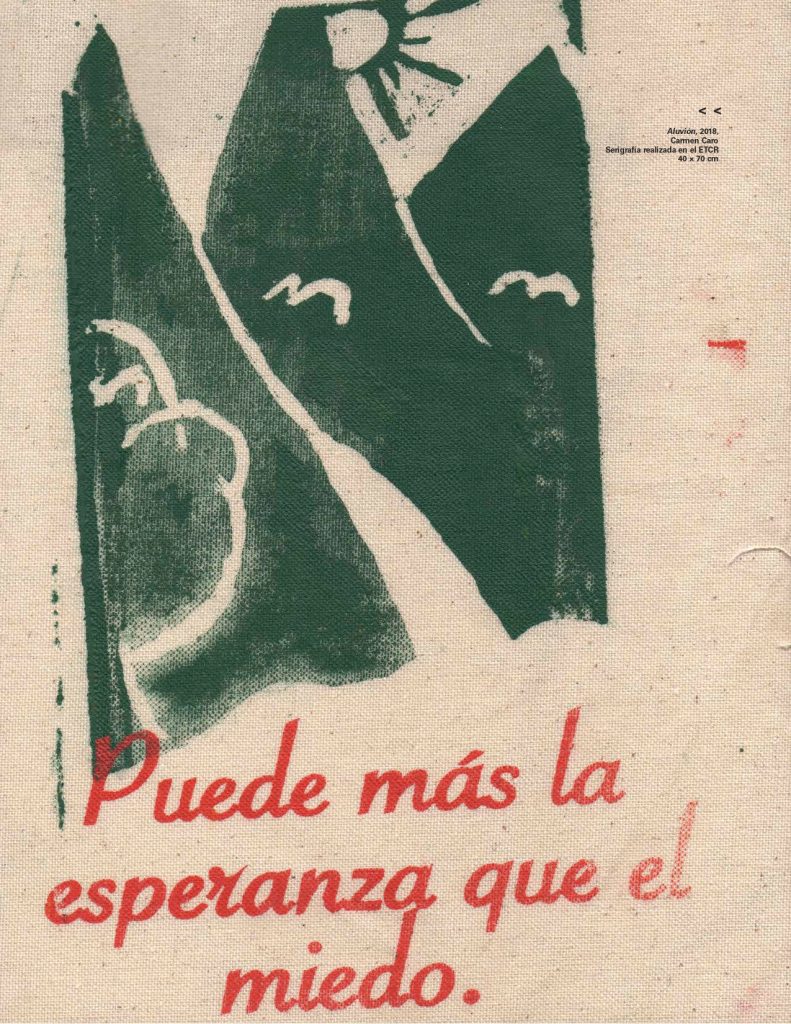
Aluvión: el perdón como acto revolucionario. Una frontera es un punto de diálogo en Cuadernos de Música, Artes Visuales y Artes Escénicas (MAVAE), vol. 20, n.º 2: Deslocando la catástrofe: arte, limbo y pulsos, julio-diciembre de 2025

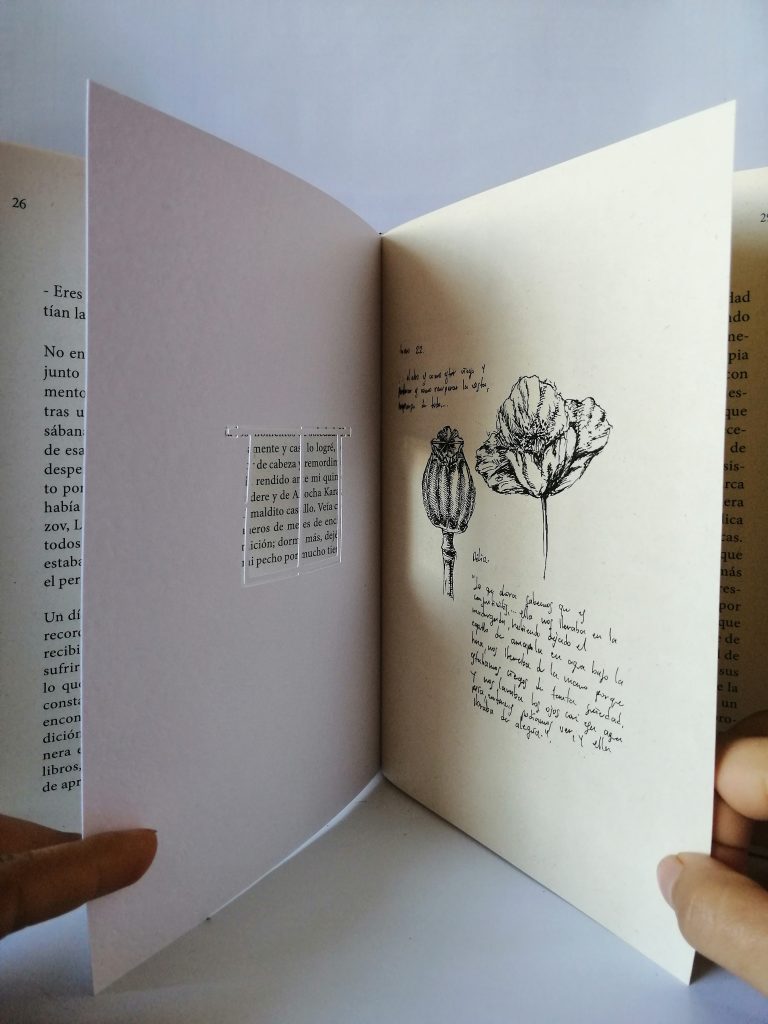

Aluviòn: El perdòn como acto revolucionario. UDFJC 2020 – 7 ediciones ùnicas
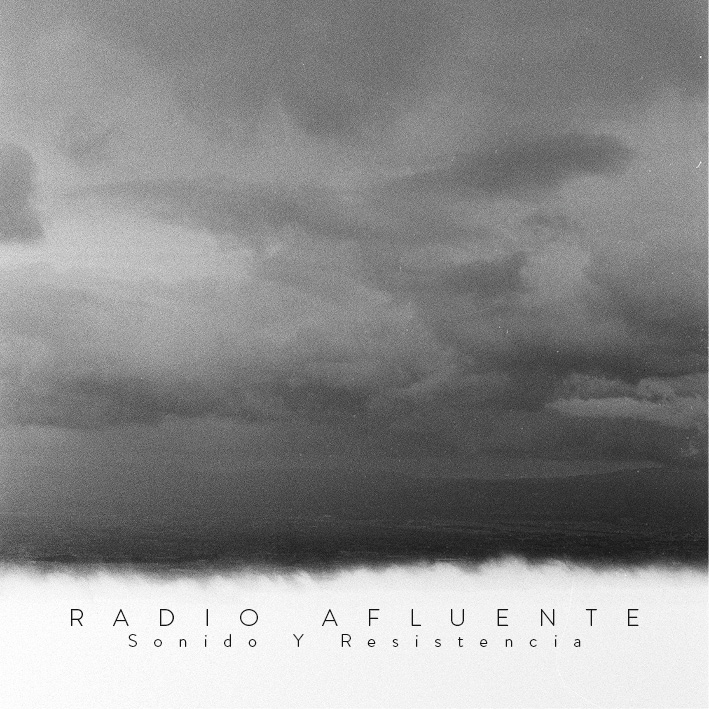
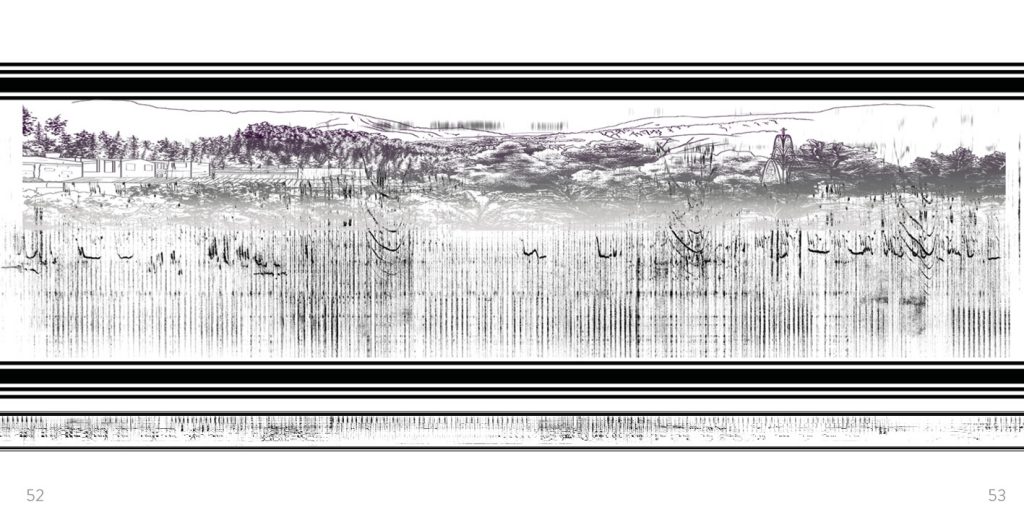
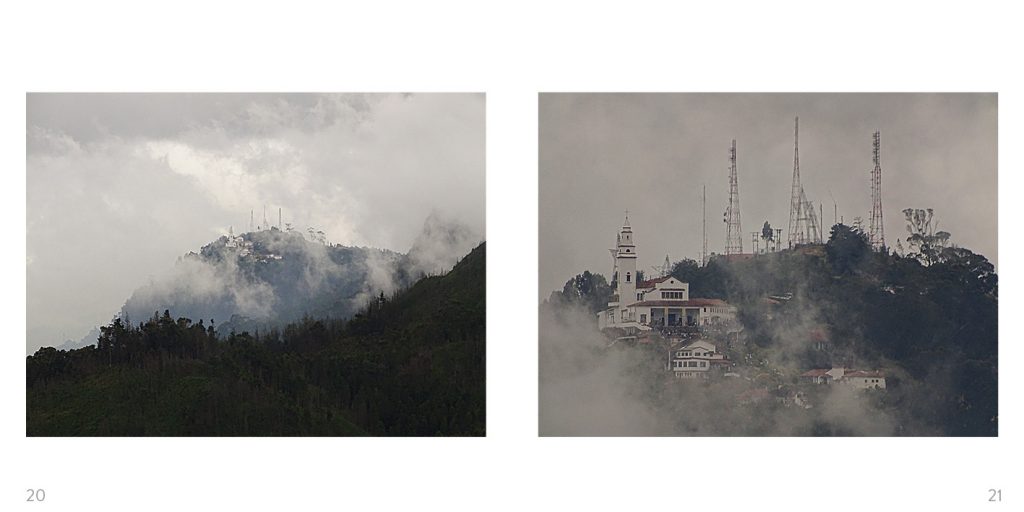
Radio Afluente: Sonido y resistencia. Publicación virtual bajo difusión de la comunidad. Museo de Bogotá e Instituto Distrital de Patrimonio Cultural. 2020 – Bogotà